
By accepting you will be accessing a service provided by a third-party external to https://kingsboxinggym.com.au/
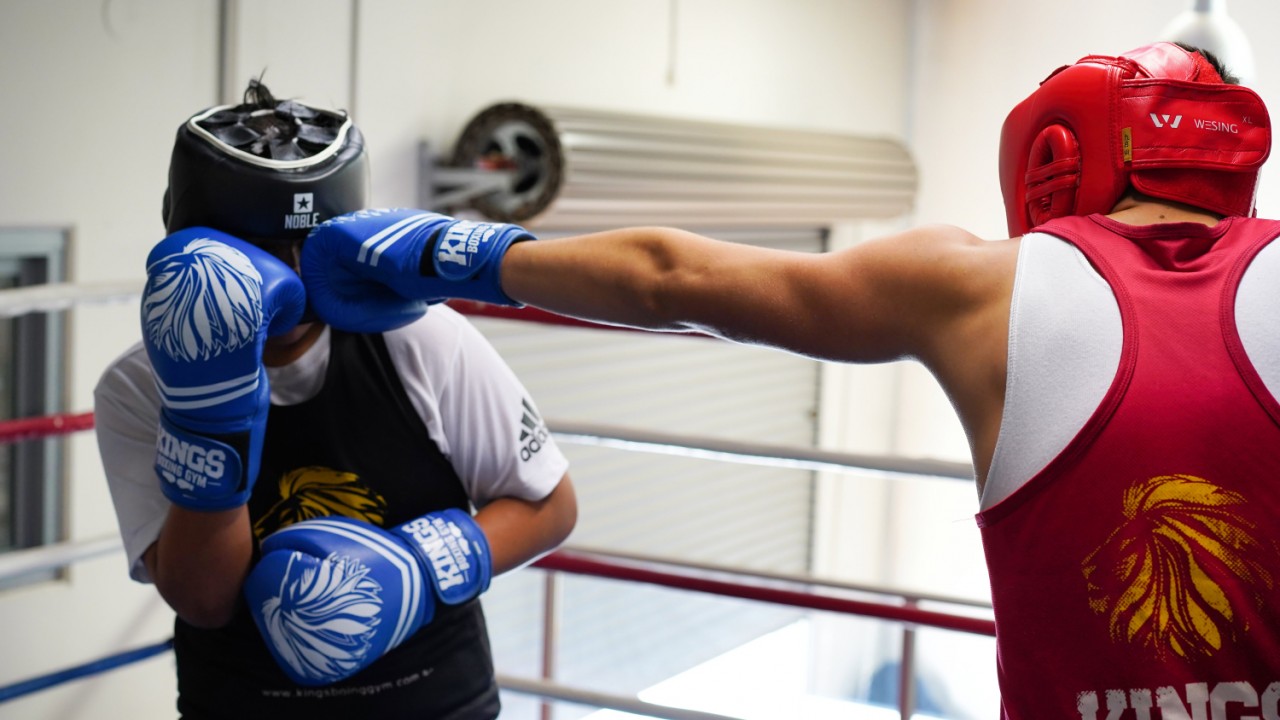
Want to be howled at by your coach? Just forget to keep your hands up while training or sparring, and you'll get an earful every time.
And for most of us, we hear the screaming a lot, since we all seem to forget this critical necessity far too often.
Of course, being yelled at by your coach isn't the only result of not properly keeping your hands up. In fact, this fundamental-to-being-a-successful-combat-athlete is that for two reasons: To keep your opponent's fists out of your face, and to have a powerful starting position from which to return salvo.
So, while your coach's bellowing will be loud-and-clear whenever you forget to keep your hands up, listening to them is still better (and less painful) than taking the same lesson from your opponent.
Unless you severely overmatch your opponent, defence is a key part of your game. While your reflexes, ability to parry, and footwork are all important aspects of good defence, your main protective guard is that of your hands and forearms. Think of them as the solid walls of a fortress that a strong offense can then be launched from.
And by this, we mean your hands are not only up to protect those good looks of yours, they're also up in position to effectively throw punches and counter punches. To be sure, should your opponent be slothful and dim-witted, you could possibly get away with broadcasting long, reach-back punches, but even then, not likely.
Instead, you need the quickness of short, powerful punches to take advantage of fleeting opportunities when they arise. It's a game of eliminating openings for your opponent while taking advantage of theirs when you can.
As most of us know, keeping your hands up isn't as easy to remember as it would seem. You work on it in practice, watch videos of yourself, and get the continuous reminder of your coach going hoarse on you that yes, you dropped 'em again.
Or you may find yourself doing great with it in practice but get that familiar pop in the jaw in the ring as a reminder that you forgot once more. It happens to all of us.
And remember too that even pros have trouble keeping their hands high once fatigue sets in.
But a big reason we tend to drop our hands boils down to one simple thing: Balance.
Consider this:
Hmmm, are we onto something here?
As with most aspects of your boxing game, there is always something to work on when it comes to keeping your hands in their proper position. That said, the most simple and effective thing you can start with is your body's positioning:
Nothing exaggerated here, and no need to don clown shoes just to keep from face planting. The idea is to lean forward just enough so that you naturally feel your hands go up and in to where they're comfortable in front of your face, and that's it.
For basic hand positioning, keep your lead hand up in front of your face so you can peek over it, and your back hand down by your chin. This eliminates the travel time your arm would require from starting in a lower location and puts you in better position to throw quick punches.
As you know, a by-products of your opponent's punches are often openings for you, so it's crucial to be in 'ready' position for these split-second opportunities.
And of course, if your opponent is the one forgetting to keep their hands up, well you know what to do!
But so far as what you can do to ensure you have the muscle memory to keep your hands where they belong, there are a few drills that will help:
Your success in the ring relies on many factors, not the least of which is ALWAYS returning your hands to their correct defensive position after punching or blocking. Once you've built a solid fortress and learned to keep it in place, you'll be in better position to take advantages of split-second openings from your opponent.
By keeping your weight forward and establishing muscle and mental memory using a few simple drills, you can take big steps in becoming a better all-around fighter. Like most of your boxing game, the idea is to work on it, work on it, and work on it some more until it becomes as natural to you as standing upright.
Plus, your ears will get a break from the din of being continuously reminded by your coach, so there's that too.
